Carve Once, Feed Twice: The Pumpkin Offcuts Plan That Ends the Bin Bag Shame
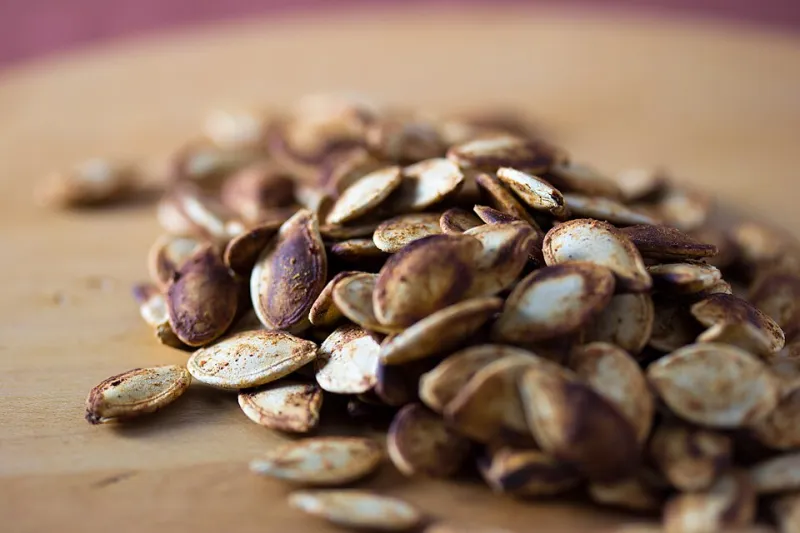
Photo: Veganbaking.net from USA, CC BY-SA 2.0, via Wikimedia Commons
There is a particular moment on 31 October — Halloween Saturday this year, which feels like a gift — when you realise you have spent forty minutes up to the elbow in a pumpkin and all you have to show for it is a decent face and a bowl of orange debris. That bowl is the bit nobody talks about. It sloshes into the bin, the bin gets heavy, and by Sunday the kitchen smells faintly of the day after a pub cellar flood.
Better plan: the debris is the décor. Not in a finger-wagging, save-the-planet, hashtag kind of way — simply because seeds scattered down a table look genuinely good and cost nothing, and because a pot of pumpkin curry made from the flesh of your own front-step artwork is a far better story than a supermarket tray bake.
Start with a clean pumpkin and a clean pair of hands
The single most common mistake is carving first and worrying about food safety later. Do it the other way round. Give the whole pumpkin a wash under the tap — the outside carries soil and whatever the field and the back of a delivery van offered it — and dry it properly.
Then set up like you actually mean it:
- One board and knife for the shell (the one you don't mind scoring with deep cuts)
- One clean board and bowl for anything that might end up in a person's mouth
- A second bowl for the stringy core, which goes to the compost or the food waste caddy
- A sieve, a tea towel and a bit of patience
Scoop the seeds into the sieve first, then the flesh into the clean bowl. Anything that hits the floor, the bin or the inside of a muddy wheelbarrow does not come back to the kitchen. That's it — that's the whole system.
Roasted seeds: table scatter that people eat
Pumpkin seeds straight out of the shell are slimy and, frankly, unappealing. Rinse them under cold water, rub them between your fingers to pull off the worst of the strands, then spread them on a baking tray to dry while the oven comes up to about 160°C fan.
Toss with a little oil and salt, spread them out in one layer (crowding is why they go chewy), and roast for roughly 20–25 minutes, giving the tray a shake at the halfway point. They should clatter, not clag.
While they're still warm, split the batch. One half gets salt and smoked paprika for the table. The other half gets cinnamon and a tiny bit of sugar — those are the ones you put in little paper cones or ramekins, one per guest, and let people pick at between courses. A shallow dark bowl of salted seeds down the middle of the table does the job of a table runner and a snack simultaneously, and looks deliberate in a way that a wilting garland never quite manages.
Keep the savoury and sweet batches in separate airtight tubs and do not put them out at the start of the night and leave them there. Seeds are a low-risk food, but hands are hands. Tip them out in small quantities and top up.
The flesh is not decoration, it's dinner
Here's the honest advice: pumpkin flesh from a carved lantern is a short-lived ingredient. Once you've scooped it, it wants to be cooked quickly — the next day at the latest — and kept in a covered container in the fridge until then. Carved pumpkins themselves should live outside, not on the kitchen counter overnight, and once they've been sitting lit and hollow for a few days they've had their moment. Cook the flesh early; display the shell later.
What to do with it depends on how much you've got. A single large pumpkin yields easily enough for a soup for eight, or a curry for six with leftovers for Monday.
A soup that suits the night: soften an onion in a big pan, add the cubed flesh, a chopped potato for body, stock, a pinch of chilli and a lot of black pepper. Simmer until everything gives up, blitz it, taste it, and season it harder than feels polite. Pumpkin is a mild vegetable and needs a shove — nutmeg, ginger, a swirl of cream, a scatter of those roasted seeds on top.
Or go the other way: a spiced coconut curry, with chickpeas, spinach and a mountain of rice, held warm in a slow cooker so you're not chained to the hob while people arrive. This is the practical argument for the whole plan. You've got a party to run. The food should be something you made at two in the afternoon and can ignore until nine.
Shells that earn their keep
A hollowed-out small squash or a scoop-fed pumpkin half makes a decent serving vessel for dips, breadsticks or that seed scatter, provided you line it. A cabbage leaf, some kale, or a bit of baking parchment means the food isn't sitting directly against raw shell — and honestly it looks better for the contrast.
For candles, be stricter. Never put a naked flame directly inside a pumpkin next to food, and never let wax drip where anything edible is going. A small jam jar or a heatproof glass dropped inside the shell solves both problems at once, and the light bouncing off the wet inner walls is the nicest thing about the whole evening.
Where the shells really shine, though, is on the doorstep: keep the carved one for the front, and use the offcuts — the lid, the carved-out shapes, a halved squash — on the table as plinths. Stack two, put a candle in the gap, done.
The timeline, Thursday to Saturday
- Thursday evening: buy and wash. Carve the lantern. Scoop seeds and flesh into separate containers, fridge both.
- Friday morning: rinse and roast the seeds. Cool fully, tub them.
- Friday afternoon or evening: make the soup or curry, cool it fast (split into shallow containers), fridge.
- Saturday afternoon: put the carved pumpkin outside, set the table with the dry stuff — shells, candles, empty bowls.
- Saturday evening, half an hour before: reheat the food properly, tip seeds into small bowls, fill the squash vessels. Light the candles.
The boring bits that keep it safe
Two hours is the number to remember: hot food out on a table for more than about two hours should be binned, not saved. Keep soup in a slow cooker on warm, or reheat in batches rather than putting out the entire pot at once. Cool leftovers quickly and get them in the fridge within 90 minutes — no leaving the curry on the hob because you're too tired.
And if you're carving with children, they scoop, you cut. That's a fair division of labour and it keeps everyone's fingers where they belong.
The result is a table that looks like you've thought about it, food that came free with the decorations, and a bin bag that isn't quietly humming by Sunday morning. Three wins for forty minutes of scooping.