Chalk, Clips and a Printed Map: Running Your Street's Pumpkin Trail Without the Late-Night Sweep
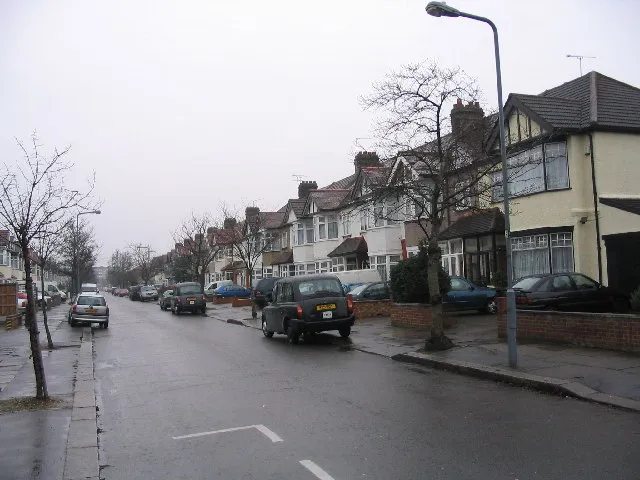
Photo: Andrew Dann, CC BY-SA 2.0, via Wikimedia Commons
Every October, a WhatsApp group somewhere in Britain decides at roughly ten days' notice to run a pumpkin trail. Half the street says yes, two people volunteer to draw a map, and the whole thing either becomes the nicest hour of the autumn or a fortnight of quietly binning other people's soggy laminated signs. The difference is rarely effort. It is whether somebody sat down with a sheet of A4 and thought about the boring parts first.
That is what this is: the boring parts, in order.
Why a trail beats a party
A trail has no venue, no hire fee, no argument about whose kitchen the punch goes in. It is a set of front gardens with a walking route strung between them. Nobody hosts for more than forty-five minutes, nobody has to invite anybody, and the whole thing can be called off by text if the weather turns. It also suits the shape of a British street far better than a gathering does: terraces, cul-de-sacs and estate loops all have a natural circuit, and the circuit is the event.
Start with one sheet of A4, not a committee
One person, one clipboard, one deadline. Ask for six things and nothing more:
- House number or name, and which side of the road you are on
- Decorating this year? Yes, no, or 'lit window only'
- Happy to be a numbered stop on the map? Yes or no
- Happy to be a quiet stop (no sound effects, dim lighting, no jump props)? Yes or no
- Can you lend a table, an extension lead, a stepladder, or an hour on the clear-up?
- Anything to avoid: nuts, dairy, dogs, smoke, loud noises
Set the cut-off at two weeks out - for 2026 that means Saturday 17 October, with Halloween falling on Saturday 31 October. The last week of October is half-term in most of England and Wales, which matters, because it means some families will be away and some will be desperate for something to do. Build the map for whoever has replied by the cut-off and let late joiners be 'bonus stops' rather than redrawing everything.
The route itself: 25 minutes at toddler pace, not a marathon
Aim for a loop of 400 to 600 metres. A dead end is fine as long as there is a turning circle or a driveway wide enough for a buggy to swing round. Walk it yourself, in the dark, before you commit, and check four things: dropped kerbs, a clear metre of pavement, no steps, and no unlit crossing of a through road.
Number the stops from one upwards and put the biggest display near the beginning, so a family that gives up at 6.30pm still feels they saw the good bit. Add a 'you are here' dot to the map, because someone always starts in the middle.
Markers that survive a British October
Laminated A4 is the workhorse: print a bold stop number, the house number, and an arrow, punch a hole, and cable-tie it to a gate or railing. Ask before attaching anything to street furniture - many councils take a dim view of signs fixed to lamp posts.
Beyond that:
- Chalk arrows on the pavement, drawn at the last minute. Rain removes them for you, which is the point.
- Solar stake lights at every turn. Cheap, no wiring, and they solve the 'where does the trail go' problem without a single poster.
- Reflective tape along the edge of the printed map, so it is readable by torchlight at half six.
- Nothing airborne. No sky lanterns, no balloons, no glitter. They are a litter problem, a fire risk and, in more than one council area, simply banned.
Making the trail work for the whole street
This is where trails quietly fail. A decoration scheme that is charming to a nine-year-old is a wall of noise and grabby hands to a three-year-old, and an obstacle course to anyone using wheels.
Keep the pavement clear. Route cables inside gardens or tape them flat, never string them across the footway. Keep moving or lunging props above waist height, or better, leave them out altogether between five and seven. Give every household that is not taking part a small printed card reading 'not a stop this year' so children do not knock eleven times at number 42.
And build in at least two quiet stops: low light, no soundtrack, nothing that jumps. Label them on the map with a small moon symbol. Parents of sensory-sensitive children will notice, and they will tell other parents.
Sweets, allergies and the teal pumpkin
A teal pumpkin in the window is now widely understood to mean non-food treats are available - stickers, pencils, bubbles, temporary tattoos, small craft kits. Keep a clearly labelled nut-free bowl and put the ingredients list of anything you are handing out where an adult can read it. Nobody should have to interrogate a stranger on a dark pavement to find out whether a sweet is safe.
Timing, weather and the fallback
Run it 5pm to 8pm. Two hours is plenty, it gets everyone home before it is properly late, and it means the clear-up is not competing with bedtime.
Have a rain plan agreed in advance, not on the day. The simplest one: a lit-window rule. Everyone who signed up puts a lit pumpkin on the sill from 4pm, so the trail still reads from the pavement in the drizzle, and the walking version rolls to Sunday 1 November. In wind, swap every candle for an LED without discussion - this is not the year to be the person who set fire to a hedge.
The clear-up rota nobody wants to organise
Two volunteers, one litter picker, one bin bag, 8.30pm to 9pm. Signs come down, are dried on a tea towel, and go into a labelled box that lives in somebody's garage until next October. That box is the single best investment your street can make: next year's trail starts with a map, a marker pen and a stack of laminated numbers already done.
The one-page checklist to print
- Walk the route in the dark
- Sign-up sheet out, cut-off 17 October
- Stop numbers and a map with a 'you are here'
- Two quiet stops marked
- Chalk, cable ties, laminate pouches, solar lights
- Teal pumpkin and a non-food bowl
- Rain-date text drafted and saved
- Two names on the clear-up, 8.30pm
Do those eight things and the trail runs itself. Which is exactly what a good street event should do.