The Turnip Strikes Back: Styling a Properly British Halloween Lantern in 2026
Pumpkins may rule the supermarket shelves, but the British Halloween lantern has a much knottier family tree. Before the orange imports took over, people in Ireland, Scotland and parts of northern England were carving root vegetables — turnips, swedes and the occasional mangelwurzel — and carrying them through the dark. In 2026, with more hosts looking for displays that feel local, low-waste and a little bit odd, that older tradition is having a quiet moment. This is not about banning the pumpkin. It is about giving the turnip a seat at the doorstep table.
Why the turnip refuses to stay buried
The folklore is messy, which is part of the charm. Samhain, All Hallows and the old guising traditions all feed into the lantern story, and carved root vegetables were used in Ireland and Scotland long before Halloween became a supermarket event. When those traditions crossed to North America, the pumpkin was waiting: native, plentiful and far easier to carve than a rock-hard turnip. The American jack-o'-lantern took off, and by the time it travelled back to the UK it had become the default. But it never fully erased the older habit. In parts of Scotland, a neep lantern is still a familiar sight, and in 2026 it is exactly the sort of local detail that makes a doorstep display feel less like a catalogue page.
Turnip vs swede vs pumpkin: the honest scorecard
A turnip is small, peppery and stubborn. It looks brilliant — pale, rooty and slightly unsettling — but carving one is a proper workout. A swede is the practical British compromise: bigger, easier to scoop, with a golden interior that glows beautifully. Pumpkins are the easiest of the lot and the most recognisable, but they can feel imported, and they are not always happy in a wet UK October. For a 2026 doorstep, the sweet spot is a trio: one pumpkin for scale, one swede for the British story, and a turnip or two for the folklore. That mix gives you the familiar silhouette without losing the older, stranger edge.
Shopping for 2026: what to put in your basket
Start with a greengrocer, farm shop or market stall rather than the supermarket display. Ask for swedes suitable for carving and check they have a flat base — a wobbly lantern is a headache waiting to happen. Look for firm skin, no soft spots and a dry stem. If you want UK-grown pumpkins, ask what is local; varieties such as Crown Prince and other squash-family options can look wonderfully moody on a doorstep. Tools matter more than props: a sturdy spoon, a small saw, a drill for neat holes and a couple of warm-white LED tea lights. A chalk pen and a paper template will beat a plastic stencil kit, and they cost less. Budget roughly £1–£2 for a swede, £3–£5 for a decent pumpkin and less than £1 for a turnip — which makes a mixed display a genuinely affordable way to look thoughtful.
A front-door plan that feels British, not imported
- Anchor the display. Start with an old crate, a milk churn or a sturdy plant pot. You want height and a bit of imperfection, not a perfect row on the step.
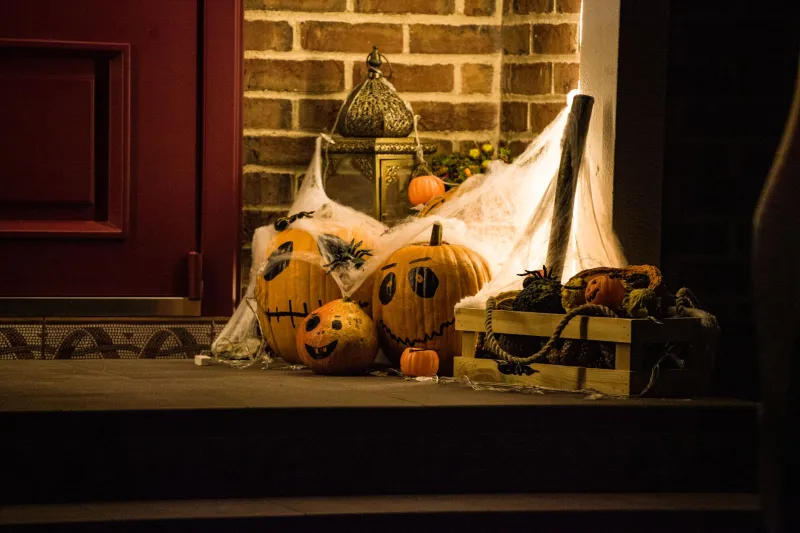
- Build a lantern trio. Put the pumpkin at the back, the swede in the middle and two turnips at the front. Carve simple faces — triangle eyes and a jagged grin — or go for initials and tiny windows instead.
- Add British texture. Straw, ivy, bracken, fallen leaves and a few dried stems will do more for the mood than a truckload of plastic cobwebs. Keep it loose and a little untidy.
- Light it warmly. Battery tea lights or warm-white LEDs inside jam jars give a soft glow. Avoid the blue-white outdoor lights that make a doorstep look like a supermarket chiller.
- Weatherproof without hiding the joins. Raise lanterns off wet paving, add a drainage hole at the base and keep them out of the worst of the wind. A covered porch is ideal; an exposed step needs a bit more support.
- Give guests a talking point. A small chalkboard saying 'Turnip: older than you think. Pumpkin: still welcome' is enough. It invites the story without turning the doorstep into a museum label.
Carving without carnage
Turnips and swedes are dense, so do not rush. Use a sharp knife and a small saw, keep your hands out of the blade path and let an adult do the tricky bits. Scoop the flesh in small stages rather than trying to hollow the whole thing in one go. A turnip lantern does not need to be perfect; in fact, a slightly lopsided face suits the tradition. Use LED lights rather than candles, especially near doorways, and keep any real flame well away from straw, ivy and costumes.
The 2026 twist
Make the display personal. Label the varieties on little wooden pegs, ask guests to guess which lantern is the oldest tradition, or let children choose the faces. Roast the seeds, compost the scraps and resist the urge to buy a whole new set of props for one night. The point is not purity — it is personality. A pumpkin beside a swede, both glowing on a damp British doorstep, tells a better story than either one on its own.