Ghouls, Not Glare: A Grown-Up Lighting Plan for a Halloween Party
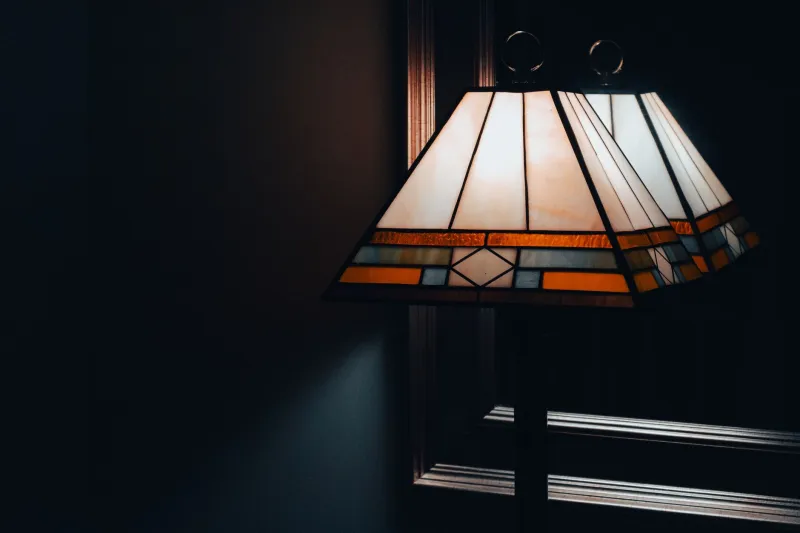
Every October, thousands of UK hosts do the same thing: they drape a string of multicoloured bulbs across the mantelpiece, plug it in, and watch the room transform from "cosy autumn evening" into "travelling fair, minus the dodgems". The decorations are fine. The lighting is doing the damage.
Lighting is the cheapest upgrade you can make to a Halloween party, and the one most people overdo. You do not need sixteen bulbs. You need three kinds, a dimmer, and a bit of restraint. Get that right and a bog-standard lounge suddenly has depth, shadow and a faint sense of something waiting at the end of the hall.
Why More Bulbs Rarely Means More Atmosphere
A room with one bright ceiling light is flat. A room with forty small lights is busy. Neither is spooky. Atmosphere comes from contrast — from pools of warm light with genuine darkness between them, so the eye has somewhere to rest and the imagination has somewhere to fill in the gaps.
That is the whole argument for keeping things minimal. Three bulb types, used deliberately, will out-perform a trolley dash round the Halloween aisle every time. It also costs less, which matters if you're hosting on a budget and would rather spend the money on food people will actually remember.
The Three Players: Amber, Flicker and Accent
Warm amber. This is your base layer. Look for LED bulbs at 2200K to 2700K — the lower the number, the warmer and more candle-like the glow. Anything above 3000K starts to feel like a dentist's waiting room. Amber is what makes a room feel inhabited rather than illuminated.
Flickering candle-style. Your texture layer. Battery tea lights, LED candles, or bulbs with a flame effect. These don't need to be realistic — they need to be irregular. Steady fake candles look like plastic; ones that wobble and dim convincingly do the heavy lifting.
One coloured accent. Your wildcard, and the bit most people get wrong. Pick a single colour — deep purple, blood orange, or a sickly green — and use it in exactly one place. Two accent colours and you're back at the fairground. One, half-hidden behind a plant or under a shelf, and the room suddenly has a secret.
The Dimmer Is the Whole Trick
If you take one thing from this article, take this: a dimmer changes everything. A bulb at 30% is a completely different object from the same bulb at 100%. It's the difference between a spare room and a séance.
You don't need to rewire anything. Plug-in dimmers start at around a tenner from Argos or B&Q, and dimmable LED bulbs are now widely available in both bayonet (B22) and Edison screw (E27) fittings — check your lamp before you buy, because this is the single most common wasted trip to the shops. Screwfix and Dunelm both stock reliable options, and your local hardware shop probably does too.
A quick compatibility note: dimmable bulbs and dimmer switches need to agree with each other. If a bulb flickers at low levels, it's usually the dimmer, not the bulb. Cheap plug-in dimmers are fine for lamps; for a dimmable ceiling pendant, you'll want a proper switch from an electrician or a smart bulb with dimming built in.
The Lounge: Pools, Not Floodlights
Turn the big light off. That's step one, and for many people it's the hardest.
Put your amber bulbs in two lamps at different heights — one on a side table, one lower down on a bookshelf or the floor. Cross-lighting like this gives faces depth and stops the room feeling like a showroom. Then add three or four flickering candles in lanterns or jam jars along the mantelpiece or windowsill, and one accent light tucked somewhere unexpected: behind a houseplant, under a side table, inside a glass vase.
Keep light sources below eye level wherever you can. Overhead light flattens everything; low light flatters everything. Dim the amber lamps to around 40% and let the candles do the rest.
The Hallway: Your Five-Second First Impression
Guests form an opinion of your party before they've taken their coat off, and the hallway does most of that work. It's also the easiest room to get right, because it's small and usually already gloomy.
Swap the pendant bulb for a warm amber one on a dimmer, and run it low — around 30%. Line the hall table or the floor with battery candles, ideally in a row that draws the eye towards the party. For the accent, a single coloured bulb behind a coat rack or in a corner alcove creates a glow with no visible source, which is far more unsettling than anything you can buy in a costume shop.
The Front Door: Warm Welcome, No Floodlit Bats
Outside, the principle is the same but the practicalities are different. You want guests to feel drawn in, not spotlit.
Use a warm amber porch bulb — 2700K is fine here — and keep any security floodlight switched off for the evening. Battery flickering candles in lanterns on the step or along the path are weatherproof enough for a dry October night, but bring them in if rain is forecast, and never run mains cables across a walkway. If you're using an outdoor accent, make sure the fitting is genuinely rated for exterior use; a £4 novelty light from a discount shop is not.
A single orange or purple glow behind a window, seen from the street, is worth more than a whole roof of inflatables.
What It Costs and Where to Buy
A realistic budget for the three-bulb approach sits between £20 and £30 if you're starting from scratch: two amber LED bulbs (roughly £4–8 each), a pack of battery tea lights or two flame-effect candles (£6–10), one coloured bulb (£3–5), and a plug-in dimmer (£10–15). Most of it is reusable, which makes the following October considerably cheaper.
B&Q, Screwfix, The Range and Home Bargains are all reliable for bulbs and dimmers at this time of year. Charity shops remain unbeaten for lanterns, glass jars and candle holders — the sort of thing that would cost £15 new and £2 second-hand.
The Switch-Off Test
Before guests arrive, turn off every light except your three layers, stand in the doorway and look at the room. If you can see the bulb itself, it's too bright. If you can't tell where the light is coming from, you've got it right.
That's the whole plan. Fewer bulbs, lower settings, one colour, and enough darkness left over for the room to feel like it's keeping a secret.