Glass Act: Turning Your Front Window Into Halloween Theatre for the Whole Street
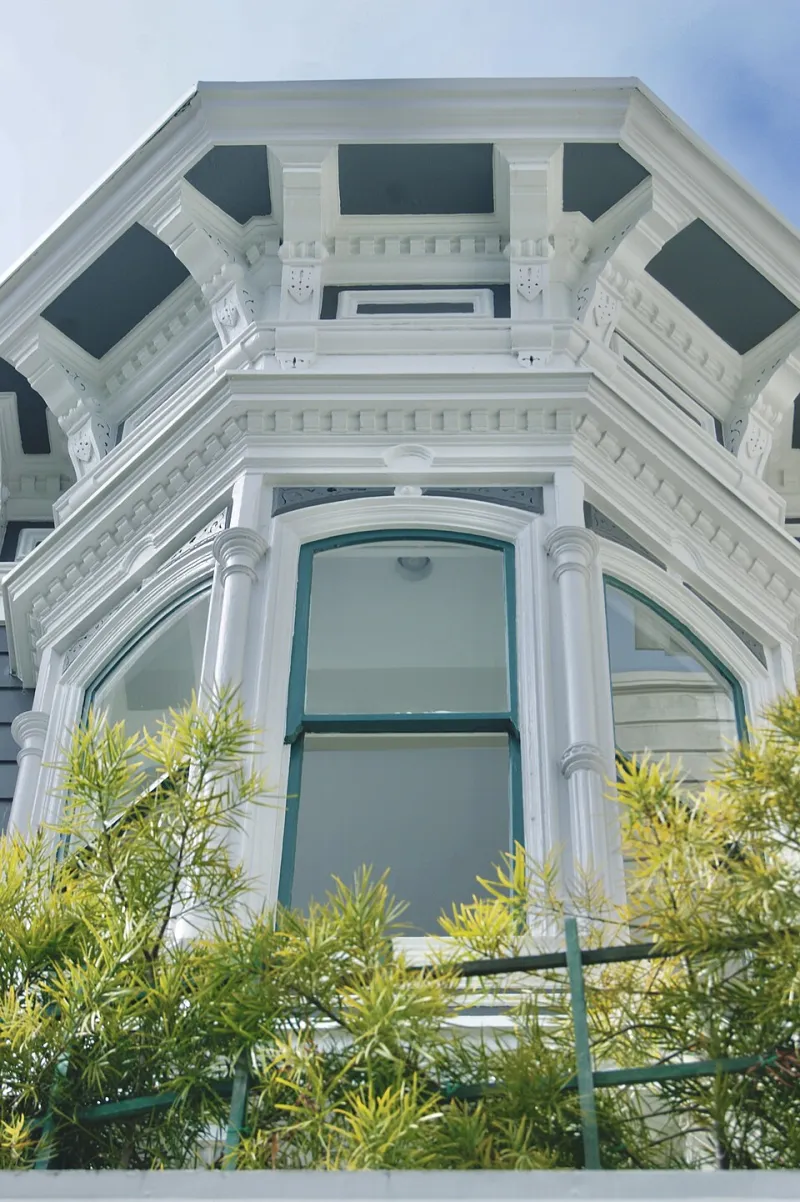
Photo: Louis H. G., CC BY-SA 4.0, via Wikimedia Commons
There is a particular kind of pleasure in walking home on a dark October evening and spotting a front window doing something unexpected. Not a giant inflatable this time, but a window: a row of candlelit silhouettes, a drift of netting, a single pair of eyes. It is neighbourhood theatre, and the cast list is anybody who happens to live on the road.
If you have never done a window before, the good news is that it is the cheapest decorating you will do all year. One pane of glass, one light source, a few shapes and a bit of thought about what the street can actually see.
Why the window matters more than the hallway
Most of us spend our budget and our effort on the hallway, which is precisely the one space with the worst trade-off: guests see it for fifteen seconds, the street sees none of it, and you are still hoovering glitter out of a stair runner in January. A window works twice. It dresses the room you are actually hosting in, and it gives something to the trick-or-treaters and the dog walkers who are never going to be invited in.
Read the glass before you decorate
Start by standing on the pavement after dark with the lights on and looking in. Note three things. How much can a passer-by see, and does that matter? Are there bedrooms at window level? Is the glass single, double, leaded, sash or a modern PVC tilt-and-turn? Each answer changes what you do next.
Georgian and Victorian sashes give you deep reveals to hang things in, and glazing bars that already divide the view into frames. Bay windows are a gift: three faces, three little scenes. Modern flats often have wide, low windows with a shallow sill, which will take a frieze but not a full installation. And leaded or stained glass is a no-go zone for suction cups, which can stress old glazing.
The three-layer rule
A window display that works from the pavement usually has three layers. At the back, something big and soft to hold the eye: fabric, paper, or the backs of furniture. In the middle, the silhouettes. At the front, the light, tucked where the street can see it glow but not see the bulb.
That is the whole trick. You are not lighting a room for a party, you are lighting a scene for an audience.
Silhouettes are still the best value in the shop
Black card is unbeatable. A metre of black card from a craft shop plus a scalpel and a cutting mat will give you bats, hares, cats, branches, a pair of standing figures, a black dog in the doorway. Tape them to the inside of the glass with the light behind them and they read perfectly from twenty metres away.
For a bit more presence, cut the same shapes from thin plywood and hang them from a tension rod using fishing line, so they float and turn a little in the draught. Fishing line is invisible at night and costs pennies.
If you would rather buy than cut, garden centres, The Range and B&M all sell light-up silhouette panels and window stickers in October, and charity shops give you the best frames, mirrors and old bird cages to sit in front of a light source.
Fabric, light and the condensation problem
Single-glazed sashes and wet October air are a bad combination, and nobody wants a fogged-up window with a grey trickle down the frame. A few small things help:
- Keep some airflow. Do not tape fabric over trickle vents or block air bricks.
- Keep fabric off the glass. Hang from a rod or a tension pole a few centimetres back, never stuck directly to a cold pane.
- Bring the soft stuff in after a few days. Textiles left against damp glass go musty fast; a week-long display with a refresh at the weekend is plenty.
- Use silica sachets on the sill behind the display if your window is chronically wet, and wipe the glass down each evening.
For lighting, battery LED spotlights or fairy lights on hidden battery packs beat mains flex any day, especially in a bay where you have nowhere sensible to plug in. Popping a small uplighter behind a chair, aimed at the silhouettes rather than at the street, gives a much more purposeful glow than a bulb hanging in the middle of the room.
Privacy, neighbours and the trick-or-treat read
One-way mirror film is a false friend: at night, with a light on inside, the street can see straight in. If the window faces a pavement, keep the display in a front room rather than a bedroom, keep the curtains or blinds in use where possible, and use frosting film on the lower half of a street-facing bedroom window.
Also think about what the display says to a nine-year-old at the gate. A window with a clear focal point and a warm glow invites a knock. A pitch-black room with a single mask in it does the opposite, which is fine if that is what you want and slightly less fine if you have bought sweets.
Safety for sashes, flats and communal doors
- Skip real candles in windows entirely. Curtains, draughts and paper do not mix. Battery candles look better through glass anyway.
- Do not run cables out of a top-floor sash or over a stairwell. Keep battery packs inside, on the sill, hidden in a box.
- Avoid drilling into PVC frames or hacking at sash cords and ironmongery; use suction hooks or fishing line over internal mouldings instead, and never tension a line across old leaded lights.
- If you are in a flat, remember the communal hall and hallway display are shared fire escape routes. Nothing goes near a fire door, and check with your managing agent before fixing anything to a shared window.
- Check your contents insurance and tenancy for anything fixed to the exterior; window clings and interior displays are almost always fine, external fixings sometimes are not.
A thirty-pound high-street run
Black card and a scalpel, a roll of black tissue paper, fishing line, a pack of suction hooks, two sets of battery fairy lights and a set of window clings, with a charity-shop bird cage or mirror for the sill. Poundland, B&M, Home Bargains and The Range will do most of it in one trip; Dunelm and IKEA cover the fabric side if you want a backdrop.
After the night
Take the display down while it still looks good, not once it has gone droopy. Wipe the glass, bin the tissue, coil the lights and label the box, and you will actually reuse the whole thing next October instead of buying it again.
Because the real point of a street-facing window is not the one night. It is that for a fortnight, your bit of pavement has a small, free piece of theatre on it, and everybody walking past gets to enjoy it.